Friday, 9 January 2015

Michael Jackson


He as not only "The King of Pop," but he dominated the whole Pop Video. 


Jackson was born in Gary, Indiana in 1958, and died in Los Angeles, California in 2009. His death caused an absolute uproar, the whole world reacted with utter sadness and shock. Jackson’s children said he was “the best daddy ever,” he cared for his children, which is evident through the teary Paris break down. His music inspiration came from his father who played guitar for an r&b band, while his mother sang as well as played the piano. They were passionate about music, and thoroughly encouraged him to study music.

Missing daddy: Paris (L) and Prince Michael Jackson I (R) watch the crowd while thier brother Prince Michael Jackson II hides between themBreaking down: Paris cries after paying tribute to her father Michael Jackson at his memorial concert, surrounded by his family; (L to R) Marlon, Tito, Jermaine, Randy, Paris, Rebbie, Janet and Prince Michael


His father saw potential in his children, and created the Jackson 5 and began playing gigs around town, expanding to bars and clubs – winning several talent shows. From then on, they began making a name for themselves. Jackson 5 eventually signed to Motown Records, fortunately their first album Diana Ross Presents Jackson 5 reached number 1 on the r&b chart and number 5 on the Pop Albums Chart. Their success continued, and Michael as the lead singer gained a massive amount of success. But, music began to more of a chore than actual childhood enjoyment, because of the pressure and hard work, he felt that he missed out on his childhood. 


The song is literally, about a bird, "he rocks in a tree top all day long." But it could be symbolic of a r&b "rocker," as he's "really gonna rock tonight." I imagine a jazz bar, full of people dancing along resembling a "rocking robin," itself. The beat is upbeat, correlating with the lyrics and the bright colours. The camera gazes at the audience, illustrating the age range he reaches out to.


Michael was making even more of a name for himself with a few solo albums. His hit songs include “Ben,” and “Got to Be There,” but as soon as he met his to be music Producer on the st of The Wiz, he broke away from his family bonds and began his first album, Off the Wall. With four top 10 songs, like “Rock with You” he became one of the biggest stars in Pop Music.


Jackson started working with the famous Quincy Jones while becoming a solo artist, which boosted up his success in some way. This video has Andrew Goodwin’s conventions that can be applied to the video. At the beginning of the video there is a dark silhouette with glimmers of bright, optimistic colours like blue and green. This could symbolises how he is a new, fresh and exciting artist about to bloom. It also has an element of excitement.


As the music continues, the light becomes clearer and the audience is able to se that it is Michael Jackson, it is almost like he’s “hatching,” from his childhood, and becoming a solo artist in the music industry. His outfit, is silver and glittery, forcing the audience to focus on him. The light behind him is shaped like a star, foreshadowing his later success. He conforms to the iconography of the 70s, being the centre of just not Hollywood attention, but World domination. The split screen enables the audience to subconsciously remember him, implanting the image to their heads.
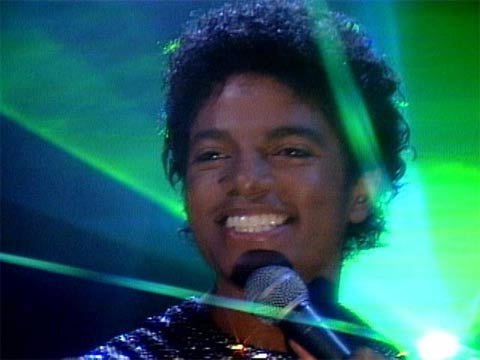

Hel later performs an iconic feet movement, Richard Dyer would suggest that his record company perhaps pressured him to perform something that the audience will remember, and try to imitate. Also, here are close ups of him smiling, showing him in a friendly, and fun manner. This reinforces Goodwin’s idea of how this makes the audience see the performer in a certain way. This highlights his star quality, and performing ability. This is also an implicit voyeurism in his eye, watching and connecting with the audience. Again, he dances in the centre, further emphasises his performing ability, and suggests that he brightens up your mood in dark times.  The editing is fast pace, but easy to keep up with so that the audience can grasp everything. It allows the audience to engage, and get to know Michael in a optimistic light.

Wednesday, 7 January 2015

The Music Industry: Record Labels


The music industry has four main multi-national corporations which lead the whole industry. Rising artists aim to get recognition from these label to ensure success.


Universal Music Group

Eminem


Jessie J


Taylor Swift


Sony Music 

Beyonce


Miley Cyrus


Little Mix


Warner Bros 


Hunter Hayes


Jana Kramer


Birdy


Major Independents 

Island records

Alex Clare


Alexa Goddard


Aluna George


Roc Nations

Andrea Martin


Arlissa


Ben Harrison


Syco Records

One Direction


Leona Lewis


Susan Boyle


Virgin Records 


Ella Eyre


Bruno Major


Bastille


Independents

Domino Records


Monday, 5 January 2015

Narrative Theory: Barthes and Propps


All texts are complex “bundles,” of meaning according to Bathes, they can also reveal many more meanings. They can be open, closed or polysemic.
Open texts have “threads to pull,” often the endings are vague, such as Christopher Nolan’s Dark Knight Rises and Inception. The audience are left unsure on the protagonists’ survival.
Closed texts have one thread to hold, which is clear and most films tend to opt for a closed text ending. For example “a Cinderella Story” has a happy ending, like most Hollywood films. However, some parts of Hollywood are trying to become more indie, like the film “Like Crazy,” which is can be either labelled as a closed text. On the other hand, it can also be named a polysemic text because the ending can be read in a number of ways; it forms several interpretations. Another example of this is “Scarface,” it  can be either read as a “rags to riches,” story, a glorification of violence, a critique of the values in the 1980s, greed and consumption.


The “threads,” are narrative codes. The enigma code comes under the narrative codes which is used a a way to attract and maintain the attention of the audience. A mystery, or a puzzle is created in order for the audience to attempt to formulate a judgement. Commonly, it is introduced in the disruption phase of Todrov’s narrative model.


Barthes’ theory can be applied to all music videos. A clear example of this is Eminem’s Stan video mentioned in my previous post. There is an ending which is clear to the audience when Stan drives into a river. Him, and his partner are killed. The audience knows that they are definitely dead by the camera revealing a scene in a cemetery, followed by a news report.
Vladimir Propps studied folk stories and identified eight main character roles. This does not limit the amount of characteristics in one character. In “Big Momma’s House,” Martin Laurence plays a mother figure, father figure, the donor and protagonist.


The Hero (Protagonist)
The Villain (Antagonist)
The Donor (Provider)
The Helper (Assistant)
The Father Figure (Gives advice and important information)
The Dispatcher (Sends hero on the missions)
The Princess
The False Hero

Star Wars

The Hero - "Luke Skywalker/Han Solo"
The Villain - "Darth Vader"
The Donor - "Obi-Wan Kenobi"
The Helper - "R2D2, C3PO, Chewbacca"
The Father Figure - "Obi-Wan Kenobi"
The Dispatcher - "Princess Leia"
The Princess - "Princess Leia"

The False Hero - "Han Solo"


Saturday, 3 January 2015

Narrative Theory: Syd Field and Claude Levi-Strauss

The Three Act Structure 


Syd Field, a writer labelled the sctructure as “three acts” in Hollywood films


The Setup is the first act which occurs within around 30 minutes of the film before the “plot point,” which normally gives the character a goal to achieve. This can be compared to Todrov’s theory when it comes to the process of disruption in which the enigmas are created. An example of this is Eminem’s “Stan” featuring Dido, the first plot is when Dido discovers Stan’s basement, filled with Eminem poster and pictures. At this point, enigmas are created and the protagonist goal or aim is to get a response from Eminem himself.

The Confrontation is the second act where the character’s struggle must take up half of the running time, in Eminem’s music video, the character writes another letter to his idol. On the other hand, Field suggests that there is “mid-point.” This is a subtle turning point of the confrontation such as a reversal fortune for the character. Stan becomes aggravated as the fan mail goes missing.

The Climax happens in the last quarter, which is also referred to as the third act. This displays the climax of the protagonist, which is either them achieving their goal or not. This illustrates the aftermath of the struggle, if it ends this way then it would be labelled as a closed text according to Barthes. At the end, Stan in rage, yells at Dido and drives the car into a river.


Claude Levi-Strauss and Binary Oppositions

Levi Strauss stressed that the narrative’s structure relies on binary oppositions. There is a conflict between the dominant, and subordinate.


Dominant

Middle-aged
Men
White
Middle/upper clas
Able-bodied
Regional identity 
Heterosexual

Subordinate

Young/old
Disabled
Working class
Women
Regional identity, other than London
Homosexual
Ethnic groups


Stan is a white, able bodied and heterosexual which is displayed rather powerfully in contrast to Dido, although she is white she is a woman, therefore subordinate. Dido is pregnant, and we presume that he is the father, therefore he is automatically the “man of the house.” He also seems to emotionally manipulate her, getting into arguments and making her cry. She hasn’t got a piece of mind as he puts his obsession over his priorities, Dido and the baby. He is almost always in control, despite committing suicide in the end. Stan loses control as the music video carries on, leading him to his tragedy. It is arguable whether, Eminem himself is the completely in control. He also falls under the characteristics of someone who belongs in the dominant group, especially because he is a famous, wealthy white a male. Stan’s obsession exemplifies how someone in a dominant group can have power of someone who is inferior to them. As soon as Stan became a fan, his obsessive nature controls his actions.

Thursday, 1 January 2015

Styles of Music Video

Narrative 

When a music video follows a certain storyline is called a narrative based music video. It is common to do in the music industry, it helps the audience relate and engage with the meaning of the song. Romantic songs usually take up this stance.


The music video follows young love to adulthood.  Having the same colour eyes perhaps represents how they are soul mates, connected on a deeper level.  The female sings not just love, but resentment and pain… “I don’t wanna fall in love.” This song is like the after effect of heartbreak, and betrayal. The woman who the male sleeps with towards the end becomes an object of desire, “its strange what desire can foolish people do,” which was the ultimate downfall of the relationship.  Visually seeing this encourages the audience to relate and sympathise with the main female. The other female somehow looks like she cannot be the one the man loves, but succumbs to sleeping with him anyway. The man tries to grab the woman he loves, but she breaks away. She lets go – she wants to detach herself from love.


Cinematic 

Cinematic has a similar approach to narrative but there is a film quality to it. Often, there are clips of a movie incorporate into the music video to make it look more realistic. An example of this Eminem's lose yourself.


Studio Based

It's rather self explanatory - music videos based at a studio, most are performed in s stylish way.


Intertextuality 

This is when a music video refers to other texts, "Walks like Rihanna," imitates Back Street Boys and Take that.


Parody


Pastiche


“As Live”